

GST and InvoiceNow: What They Mean for Your Software
Two compliance topics shape almost every cloud accounting decision in Singapore. This guide explains what each one asks of you in practice, how it affects your software choice, and what to confirm before you commit to a platform.
Compare platforms on GST readinessStart with what the rules actually ask of your books
GST registration depends on your taxable turnover, and once you are registered you take on filing obligations with IRAS on a set schedule. The software's job is narrow but unforgiving: record output tax on sales, input tax on purchases, and produce a return that reconciles to your books. That sounds simple until you hit credit notes, zero-rated exports, or transactions that span two filing periods.
This page is written for business owners and finance staff, not for accountants who already know the rules by heart. It covers what to check in a platform, how InvoiceNow changes the picture, and where a local provider fits between you and the software.
What to confirm with a vendor
Ask for a demonstration using your actual transaction mix, not a demo dataset. These are the questions that separate a working setup from a sales conversation.
GST coding defaults
Ask how tax codes are applied by default across invoicing, expenses, and bank reconciliation, and whether you can adjust them when a transaction does not fit the standard pattern.
The InvoiceNow transmission path
Ask how an invoice leaves your system, who transmits it, and what happens when a customer rejects or disputes one. That last question tells you more than a readiness badge.
Costs attached to e-invoicing
Confirm whether the transmission path carries a per-document charge, a separate subscription, or nothing beyond your plan. Ask for it in writing before you sign.
Audit trail after a period locks
Once a filing period is closed, find out what can still be edited, what is recorded, and how a correction is documented if the return is reviewed later.
Getting your data back out
Ask what happens to your records if you leave the platform. A clean export matters if you ever switch systems or hand the books to a new provider.

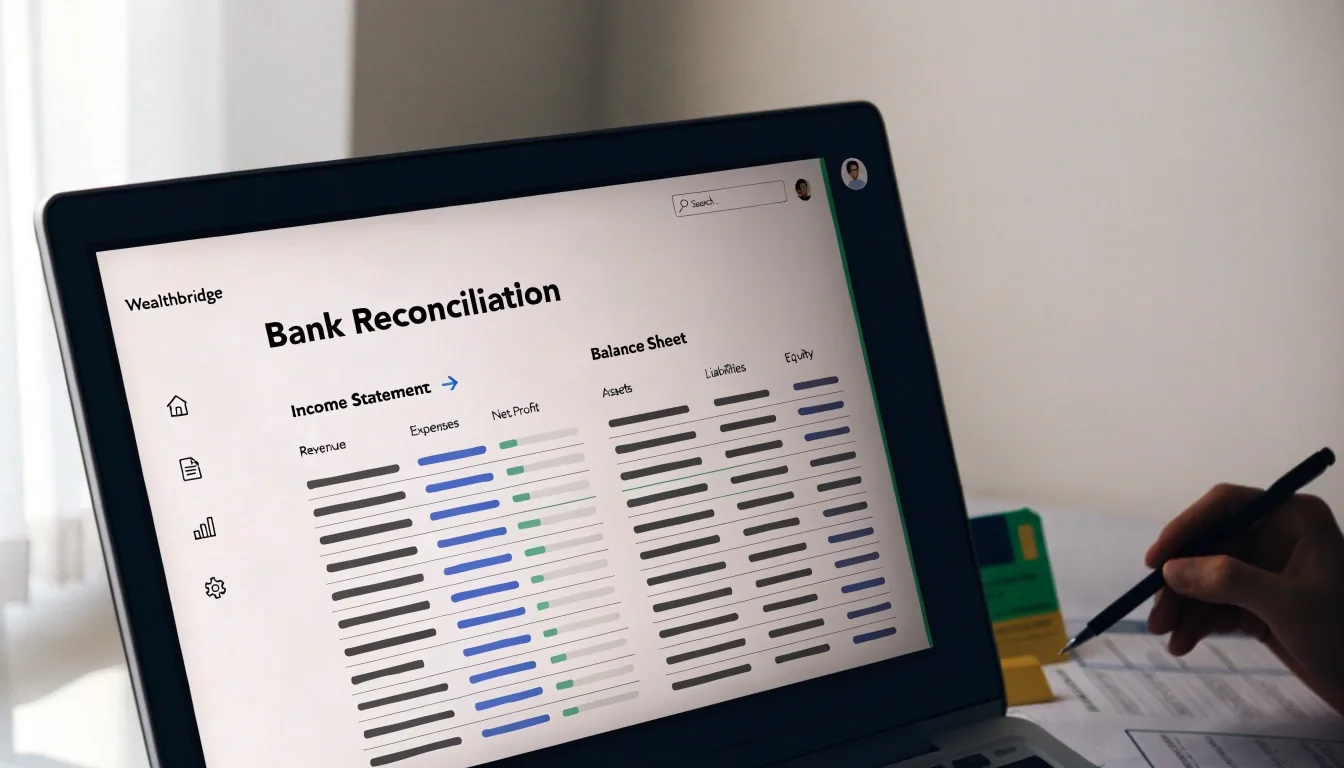
Reconciliation work happens between the filing periods. The records you keep then decide how easy the return is.
GST basics for software buyers
A platform that handles GST well applies codes consistently across invoicing, expenses, and bank reconciliation, and keeps the supporting records intact if the return is reviewed later. A platform that handles it badly forces a spreadsheet reconciliation every quarter, which is where errors creep in.
When you evaluate software, ask to see a full GST cycle run end to end using your own transaction types. Watch how a credit note is applied, how a zero-rated export is coded, and how a transaction dated across two filing periods is treated. Those three moments reveal more about the platform than any feature list.
InvoiceNow in practice
InvoiceNow is Singapore's e-invoicing network, and readiness means different things across products. Some platforms generate e-invoice documents natively, some connect through a partner or an accredited access point, and some can only export data for another system to send. Xero appears in Singapore guide and marketplace content in an InvoiceNow-ready or accredited context, which is why it comes up so often in this discussion.
For B2B businesses, e-invoicing is increasingly the expected channel, so it is worth confirming the exact mechanism rather than assuming. Ask how an invoice leaves your system, who transmits it, and what happens when a customer rejects or disputes one. That last question separates a working setup from a checkbox.
Native generation
The platform produces the e-invoice document itself. Confirm it handles your invoice formats and credit notes, not just the happy path.
Partner or access point
A third party transmits on your behalf. Find out who that is, what they charge, and who you call when a transmission fails.
Export only
The platform hands data to another system to send. Workable, but you carry the integration and the timing risk yourself.
Why cloud bookkeeping changes the compliance picture
On a desktop or hybrid system, the GST working papers live on one machine, and whoever holds that machine controls the process. Cloud bookkeeping puts the ledger in a browser, so a bookkeeper can prepare the return while the director reviews it from elsewhere, with multi-factor authentication protecting both logins.
Bank feeds pull transactions in automatically, which reduces the manual entry that causes most GST errors. That does not make compliance automatic. Someone still has to review coding, chase missing receipts, and check that the return reconciles. Cloud software removes friction; it does not remove responsibility.

Cloud software removes friction; it does not remove responsibility. Someone still reviews the coding and signs off the return.
Krovenza editorial note
The first filing after a migration is the one that tests the setup, which is why local implementation help matters.
How this affects your platform shortlist
If GST is your main concern, prioritise platforms with clear Singapore tax handling and a demonstrated filing cycle. The differences between them show up in detail rather than headlines.
Xero
Widely implemented in Singapore and referenced in local guide and marketplace content around InvoiceNow readiness. Check the current accreditation status and the filing cycle directly with the vendor or a local provider.
Zoho Books
Positions itself around local tax obligations and pricing tiers that suit smaller teams. Ask how GST codes are applied by default and whether the return reconciles without a manual step.
Financio
A Singapore-focused option that leans on local tax handling. Worth a look if you want the compliance conversation to happen with a team that works in this market every day.
A2X
If you sell across several marketplaces, GST is only part of the picture. A2X handles settlement and reconciliation for platforms including Shopify, Amazon, Etsy, eBay, Walmart, and PayPal, feeding clean data into your ledger so the GST figures are built on accurate revenue.
Where local providers fit
A local provider can configure GST codes, set up your chart of accounts, and handle migration so the first filing is not a test run. Wealthbridge Corporate Services Pte. Ltd., KLOUDEX Pte. Ltd., Everyday Corporate Pte. Ltd., and Aggregate Cloud Accounting Software (Xero) all appear in the SMEs Go Digital directory with Xero-based offerings, which means there is a documented local implementation path.
The software is the same whether you buy direct or through a provider. What changes is who answers the phone when a filing deadline is close. That is worth weighing explicitly rather than assuming.
Buying direct from the vendor
Lower ongoing cost and direct access to product updates. Support is handled by the vendor's own channels, which may not follow Singapore working hours.
Buying through a local provider
Setup, chart of accounts, and migration handled for you, with a person in this market to call when a deadline is close. You pay for that layer somewhere in the arrangement.
Questions we hear before a platform decision
Does InvoiceNow readiness mean the same thing on every platform?
No. Some platforms generate e-invoice documents natively, some transmit through a partner or accredited access point, and some only export data for another system to send. All three can work, but they put different responsibilities on you. Ask which one you are buying before you compare prices.
Can cloud accounting software file my GST return for me?
The software prepares the figures and the return, but a person still reviews the coding, checks the reconciliation, and submits to IRAS. Treat the platform as the record and the working papers, not as a replacement for review.
What should I ask before a migration, not after?
Ask how opening balances are brought across, how historic transactions are handled for the first return, and whether the provider or vendor runs a test cycle before your live filing period. The first filing after a migration is the one that tests the setup.
If I sell on marketplaces, does that change anything?
It adds a settlement and reconciliation layer before the GST figures are reliable. Tools such as A2X handle that for marketplaces including Shopify, Amazon, Etsy, eBay, Walmart, and PayPal, so the ledger receives accurate revenue rather than gross payouts.
Does Krovenza sell accounting software?
Krovenza is an independent editorial resource. We compare platforms and explain the compliance picture so you can evaluate options before you buy. Platform names are referenced for identification and comparison, and you should confirm current accreditation and pricing directly with the vendor or provider.
Talk to the editorial desk
Questions about how a platform handles GST filing, or about a point in this guide? Send them to the desk and we will point you to the relevant comparison or review.
Registered office
Krovenza Pte. Ltd.
71 Robinson Road, #14-01
Singapore 068895
Email the desk